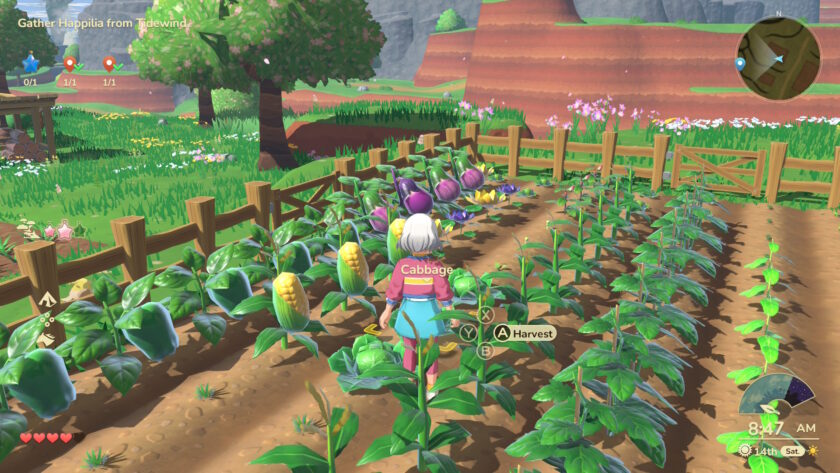
Echoes of Teradea: How to Fertilize Trees
If you are playing Harvest Moon: Echoes of Teradea and wondering how to fertilize fruit trees, there is an important difference between trees and regular crops: fruit trees do not require fertilizer or daily watering.
Instead of treating them like turnips, tomatoes, or other field crops, you should plant your saplings in the designated tree-growing area and let them grow. Here is how the system works.
Do You Need to Fertilize Trees in Echoes of Teradea?
No. According to available game guides, fruit trees in Harvest Moon: Echoes of Teradea are designed to grow without regular fertilizer or watering.
This means you do not need to spend your manure-based fertilizer on your orchard. Save it for regular crops if your goal is to improve their quality.
The tree system is simpler than the standard farming system, allowing you to grow fruit without adding another daily chore to your routine.
How to Plant Fruit Trees
Follow these steps to get started with fruit trees:
Get a tree sapling. Check the General Store or the Traveling Merchant for available saplings.
Go to the designated tree area. Fruit trees use a dedicated growing space rather than the regular tilled plots used for rotating crops.
Plant the sapling. Choose a suitable spot and follow the game's planting interaction.
Let the tree grow. You do not need to water or fertilize it every day.
Check the tree during its fruiting season. Trees produce fruit during specific seasons rather than throughout the entire year.
Keep in mind that sapling availability may depend on shop progression and your progress in the game.
How to Get Fruit From Trees
Fruit trees are seasonal. Once a tree begins producing fruit, you can return to harvest it when the fruit is ready.
After the first harvest, a tree can produce additional fruit during the same productive season. When that season ends, the tree becomes dormant until its fruiting season returns the following year.
For this reason, check your orchard periodically instead of spending time interacting with every tree each morning.
👉READ MORE:
- easy-money-harvest-moon-echoes-of-teradea
- harvest-moon-echoes-of-teradea-upgrade-barn
- harvest-moon-echoes-of-teradea-puzzles-walkthrough
Should You Use Fertilizer on Regular Crops Instead?
Yes, if you want to make better use of your fertilizer supply.
Regular crops have a different growing system. You generally prepare the soil, plant seeds, water the crops, and apply fertilizer to help improve crop quality.
You can produce fertilizer by collecting manure from the barn and processing it with the Fertiliser Machine.
If your fields are struggling, you can also check their condition with Soilbot and allow depleted plots to rest so their soil can recover.
Fruit Trees vs. Regular Crops
| Feature | Fruit Trees | Regular Crops |
|---|---|---|
| Daily watering | Not required | Generally required, unless it rains |
| Fertilizer | Not required | Useful for improving crop quality |
| Growing area | Dedicated tree area | Regular farming plots |
| Harvest season | Specific seasons | Depends on the crop |
| Repeated harvests | Can produce multiple times during the season | Depends on the crop |
Why Aren't My Trees Producing Fruit?
If your tree has not produced fruit yet, check these possibilities:
Wrong season: The tree may only produce fruit during a particular season.
Growth time: A newly planted sapling may need time before it starts producing.
Harvest timing: Check again later if the tree is not ready to harvest.
Tree type: Different trees may have different fruiting seasons.
Do not waste fertilizer trying to force a tree to produce fruit. The available guides indicate that seasonal growth, rather than daily fertilizer or watering, determines when fruit trees produce.
Final Thoughts
In Harvest Moon: Echoes of Teradea, fruit trees are much easier to maintain than regular crops. You do not need to fertilize or water them daily. Plant your saplings in the designated tree area, allow them to grow, and return during their fruiting seasons to collect the harvest.
For a more efficient farm, save your fertilizer for regular crops and use your orchard as a low-maintenance source of seasonal fruit.
Comentários
Postar um comentário